The Long Game: Understanding Compound Wealth (and Cultural Longevity)

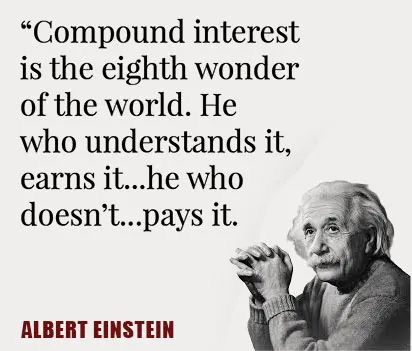
Compounding is often described as a mathematical miracle. In practice, it is a behavioral one. The idea is simple enough: small, consistent gains accumulate exponentially over time. But the conditions required for compounding—patience, restraint, continuity—are precisely the traits modern markets and media discourage. We celebrate acceleration. We reward immediacy. We confuse visibility with progress.
Compound wealth, like cultural longevity, does not thrive in that environment. This eighth wonder of the world requires a different posture entirely: one oriented toward duration rather than display.
Why Compounding Is So Rare in Practice
Most people understand compounding intellectually. Few experience it.
That is because compounding depends less on the size of the initial input than on the absence of interruption. The greatest threat to compounding is not volatility; but the extraction—fees, churn, overreaction, premature scaling, constant reinvention.
In financial markets, this is why investors who trade frequently often underperform those who do very little. The power of compounding is fragile—demanding protection from impatience.
This is as true for capital as it is for culture.
Wealth That Compounds Versus Wealth That Spikes
There is a difference between wealth that spikes and wealth that compounds.
Spiking wealth is episodic. Money arrives through windfalls, virality, or singular successes; often visible—and often temporary. Compounding wealth is quieter. It accrues through systems that repeat reliably, even when attention wanes.
The careers and institutions that endure tend to favor the latter. They prioritize governance over optics, reserves over reinvestment frenzy, and continuity over constant reinvention.
This is why long-term allocators study figures like Warren Buffett, not for spectacle but for discipline. His most cited insight—that time is the investor’s greatest ally—applies far beyond public equities. It applies to any system where value can be left undisturbed long enough to grow.
Most people don’t need more information.
They need clear thinking.
The 1:1 Strategy & Insight Call is a focused, high-signal conversation for creatives and founders who are navigating a decision, transition, or inflection point—and want experienced perspective before making their next move.
This is not coaching.
It’s not a discovery call.
And it’s not free-form brainstorming.
It’s a strategic sounding board designed to help you:
— pressure-test an idea
— clarify direction
— cut through noise
— and leave with next steps you can actually act on
If you’re feeling “I know I’m close, but I need to think this through with someone who understands the creative economy”—this is for you.
Cultural Longevity Works the Same Way
Culture compounds when it is stewarded rather than exhausted.
Movements that endure are rarely the loudest at inception. They build archives. They codify values. They invest in institutions that can carry meaning forward without constant amplification.
Museums, endowments, foundations, and legacy brands understand this implicitly. Their power does not come from novelty, but from repetition—rituals that signal continuity across generations.
When culture lacks this infrastructure, it becomes trend-dependent. When it has it, influence outlasts individuals.
The Infrastructure That Makes Compounding Possible
Compounding is designed infrastructure.
Whether financial or cultural, it relies on a few shared conditions:
Stability of structure: rules that do not change with mood or market
