The Operational Artist: Why Systems Increase, Not Decrease, Creativity

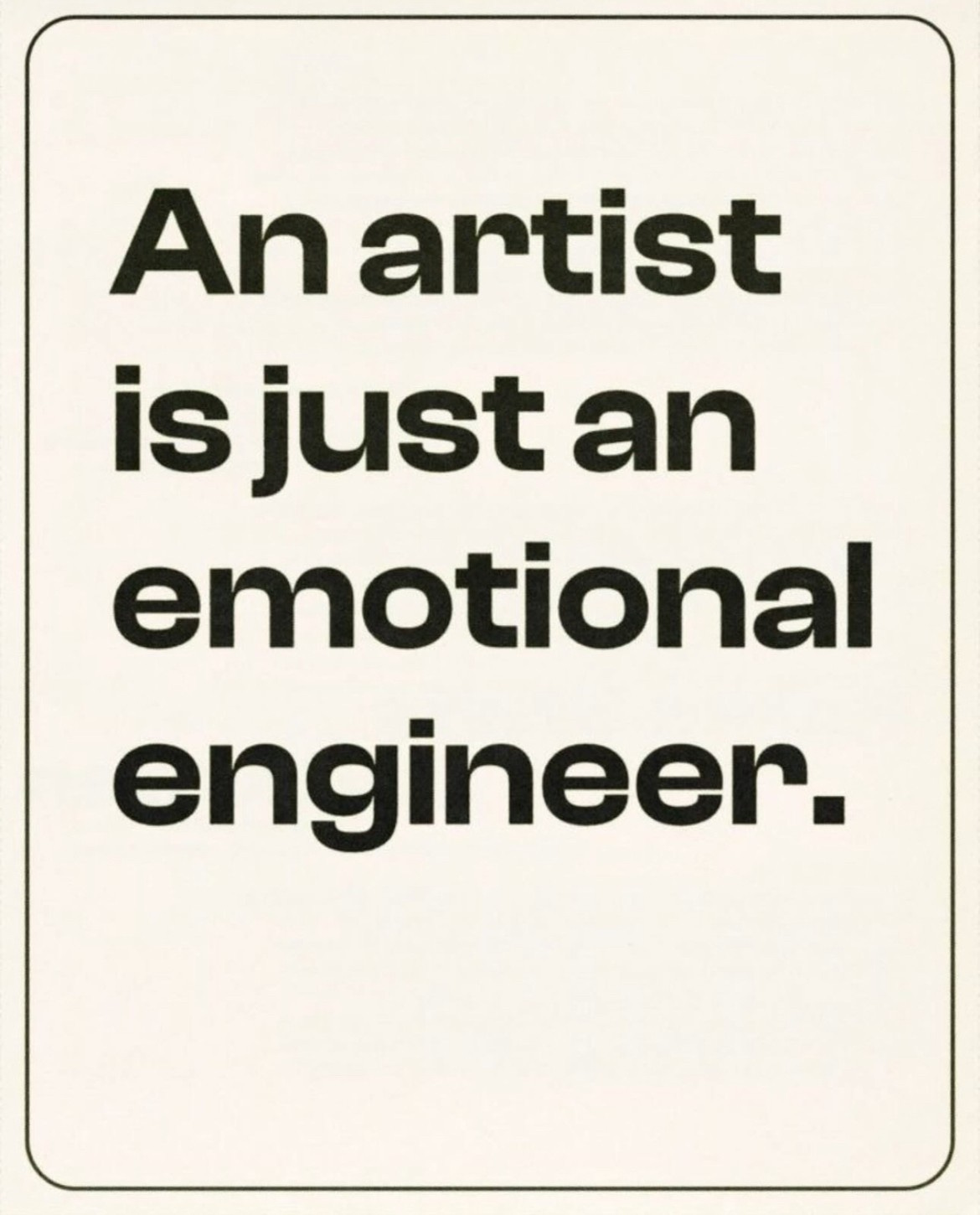
One of the most persistent myths in creative culture is that structure kills originality.
The image of the “true artist” is still tethered to chaos:
late nights, irregular rhythms, instinct over organization, inspiration as an unpredictable force that arrives only under conditions of complete freedom.
This mythology is compelling, chic, laced with copious amounts of aura even. But allow me to hold your hand with the thinnest of napkins in between us when I say: it’s also operationally unsustainable.
The reality is that the artists who produce enduring bodies of work are rarely operating without systems. In fact, these creatives are operating within systems so integrated that the public mistakes them for instinct. The operational artist understands something many creatives resist confronting:
Creativity does not collapse under structure; creativity expands because of it.
Why Creatives Romanticize Disorder
Disorder often feels creatively alive in the beginning. Improvisation creates momentum. Deadlines force invention. The unpredictability of the process can feel emotionally intertwined with the work itself.
Over time, however, disorder stops feeling expansive and starts becoming expensive. Without operational systems:
ideas disappear before execution
projects remain unfinished
opportunities arrive faster than they can be evaluated
energy is consumed by logistics instead of creation
What initially feels like freedom gradually becomes fragmentation.
I don’t believe in starving artists.
I believe in under-structured ones.
The difference between creative struggle and creative success is rarely talent—it’s systems, pricing, and clarity.
The Capital Studio is where we build that together.
Cohort begins June 10, 2026.
If you’re ready to move like an owner, not just a creative, you should be in this room.
Systems Reduce Friction, Not Expression
Many creatives misunderstand what systems are actually for, believing that this infrastructure would mechanize creativity. A well designed system reduces unnecessary friction surrounding it.
A system answers recurring questions before the drainage of cognitive energy:
Where does new work live?
How are projects prioritized?
When does research become execution?
What gets delegated?
What receives attention—and what does not?
Without systems, creatives repeatedly spend creative energy solving operational problems.
This is one of the fastest paths to exhaustion masquerading as artistic struggle.
The Operational Artist Thinks Architecturally
The operational artist treats creativity as something worthy of infrastructure.
Not industrialization.
Infrastructure.
This means building:
workflows that support consistent output
archives that preserve intellectual labor
calendars that protect deep work
financial systems that stabilize uncertainty
decision frameworks that reduce emotional volatility
When I introduce optimization into the conversation, I notice an artist or creatives’ eyes glaze over more often than not. Optimization breeds negative context in the age of late stage capitalism but in the war against human-centered creativity, the goal is continuity. Continuity is more likely to succeed when there are operational systems in place to do so.
Sometimes you don’t need a full roadmap—you need clear thinking, honest perspective, and a strategic sounding board.
The 1:1 Strategy & Insight Call is a focused conversation for creatives and founders at a crossroads: refining an idea, pressure-testing a decision, or navigating a transition.
This is not coaching.
It’s clarity, and next steps you can act on immediately.
Creativity Requires Capacity
Original thought requires space. Not only physical space but cognitive and emotional capacity. When creatives are constantly:
reacting
improvising logistics
chasing overdue tasks
navigating financial instability
rebuilding workflows from scratch;
their nervous system shifts toward survival rather than exploration.
This matters because creativity demands perceptual sensitivity, in tandem with technical production.
And sensitivity deteriorates under chronic operational chaos.
Systems preserve the conditions under which deeper creative work can emerge.
The False Binary Between Art and Operations
Creative culture often positions operations as “corporate” and creativity as “pure.”
This distinction is historically inaccurate.
Many of the most influential artists in history were deeply operational:
Renaissance workshops functioned with extraordinary organizational rigor
filmmakers operate through layered production systems
fashion houses rely on disciplined sequencing and infrastructure
architects cannot separate vision from execution logistics
Art has always required systems. The difference is whether those systems are conscious or reactive.
Most people don’t need more information.
They need clear thinking.
The 1:1 Strategy & Insight Call is a focused, high-signal conversation for creatives and founders who are navigating a decision, transition, or inflection point—and want experienced perspective before making their next move.
This is not coaching.
It’s not a discovery call.
And it’s not free-form brainstorming.
It’s a strategic sounding board designed to help you:
— pressure-test an idea
— clarify direction
— cut through noise
— and leave with next steps you can actually act on
If you’re feeling “I know I’m close, but I need to think this through with someone who understands the creative economy”—this is for you.
Operational Discipline Creates Creative Freedom
The paradox is this:
The more operational clarity a creative has, the more experimental the work can become.
Why?
Because operational stability reduces existential pressure.
When systems exist:
deadlines stop feeling catastrophic
finances become more predictable
ideas can incubate longer
risk-taking becomes strategically possible
Structure creates safety. Safety creates experimentation. This is why operational discipline often precedes creative breakthroughs rather than limiting them.
The Difference Between Workflow and Identity
Many creatives resist systems because they associate them with loss of self.
But systems are not identity.
They are support structures for identity.
A calendar does not diminish imagination. An archive does not dilute artistic instinct. A workflow does not make the work less meaningful.
Instead of thinking operational systems flattening an artist into machinery. One should view operational systems as an assistant that removes enough noise for the artist to hear themselves more clearly.
The Most Valuable Creative Skill Is Repeatability
One brilliant project can emerge from chaos.
A lasting career cannot.
The operational artist understands that longevity depends on repeatability:
the ability to return to the work consistently
the ability to sustain quality across time
the ability to evolve without collapsing under scale
This makes the practice durable.
Most creatives don’t have a business problem.
They have a structure problem.
I built The Capital Studio to solve that.
It’s a 12-week program where we focus on the systems behind your work—your positioning, offers, pricing, and how your creativity actually generates income.
Cohort begins June 10, 2026.
If you’ve been creating without a clear framework, this is where that changes.
A View Through Nina’s Lens: The Artist as Steward, Not Martyr
There is a deeper cultural issue embedded in the glorification of creative chaos. Many creatives have been taught that suffering authenticates the work. That exhaustion proves seriousness. That instability is evidence of devotion.
But martyrdom is not infrastructure.
An artist depleted by operational disorder cannot fully steward their own vision—let alone build the long-term body of work they are capable of creating.
The operational artist rejects the performance of dysfunction.
This does not make creativity less emotional or less human in the slightest. Creative work deserves conditions that allow it to survive.
If you’re interested in collaborating with Nina or Creativity Meets Capital—whether through editorial work, speaking engagements, or strategic partnerships—you’re welcome to share more details below.
Each inquiry is considered thoughtfully and in alignment with the long-term vision of the platform.
The Long View
The future of creative excellence will belong increasingly to those who can integrate:
artistic sensitivity
strategic thinking
operational discipline
and sustainable systems
Not because creativity is becoming less human. The scale and speed of modern creative economies demand infrastructure strong enough to protect human depth from constant fragmentation.
Systems protect creativity from utter erosion.
And over time, that protection becomes one of the greatest creative advantages a person can possess.
Want to Collaborate with Nina x Creativity Meets Capital?
Creativity Meets Capital engages selectively with brands, media, and institutions aligned with its core principles of cultural integrity, intellectual rigor, and long-term thinking.
Partnerships may include editorial collaborations, speaking engagements, strategic advisory, and curated programming.
All inquiries are reviewed with care.
Know & Understand Your Creative Rights!


Some founders don’t need more information—they need a strategic partner.
Through Creativity Meets Capital Advisory, I work with creatives and founders over time to clarify direction, sharpen positioning, and support high-level decision-making.
Whether you’re laying the groundwork, scaling with intention, or navigating leadership-level choices, there’s an advisory pathway designed to meet you where you are.