The Creative Process as a System: Building Repeatable Genius

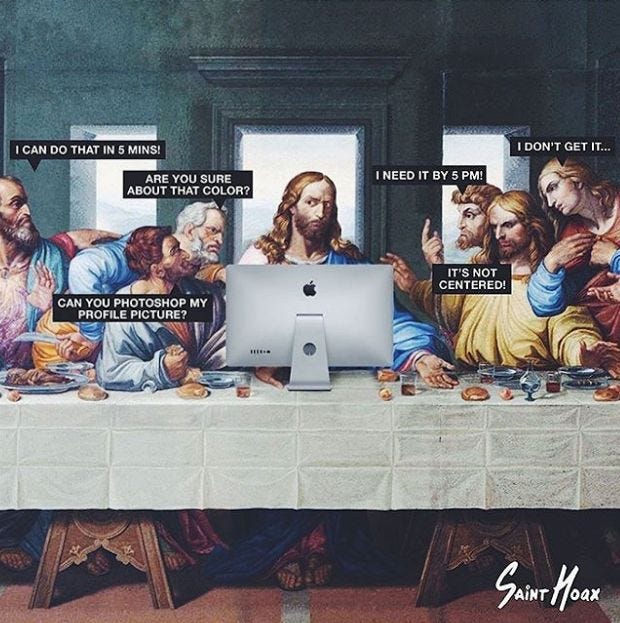
The mythology of genius has always favored the moment over the method.
History remembers the breakthrough. The masterpiece. The flash of inspiration that appears to arrive from nowhere. We tell stories about Isaac Newton beneath the apple tree, Wolfgang Amadeus Mozart composing effortlessly, or Pablo Picasso producing thousands of works with seemingly supernatural ease. What those stories often omit are the decades of disciplined practice, obsessive documentation, structured routines, apprenticeships, revisions, and relentless experimentation that made those moments possible.
Breakthroughs make better stories than systems.
Careers, however, are built on systems.
The creative economy has romanticized spontaneity for so long that many artists have come to believe structure is the enemy of originality. The implication is subtle but persistent: if creativity can be explained, perhaps it is no longer exceptional.
Yet the opposite is closer to the truth.
Behind nearly every enduring body of work is not merely talent, but a repeatable process—a set of practices that transforms isolated moments of inspiration into a lifetime of meaningful creation.
The greatest creatives did not simply create extraordinary work.
They built environments in which extraordinary work became increasingly likely.
Creativity Is Less Like Lightning Than We Imagine
There is good reason creatives resist systems.
Some of the most profound creative breakthroughs do feel spontaneous. A melody arrives during a morning walk. A painter suddenly sees the composition that had been elusive for weeks. A writer discovers the central argument of an essay while making dinner rather than sitting at a desk.
Creative history is full of these moments.
But they are often misunderstood.
Inspiration may arrive unpredictably. The ability to recognize its significance, develop it, and transform it into finished work rarely does.
Those moments are only valuable because they encounter a creator who already possesses the habits, discipline, and infrastructure necessary to receive them.
The insight is unpredictable.
The conditions that make insight useful are not.
At some point, creativity has to become infrastructure.
Not more ideas. Not more content.
Structure.
The Capital Studio is where we build that—over 12 weeks, in real time, with a cohort of creatives who are ready to take their work seriously.
The next cohort begins September 9, 2026.
This is not about becoming visible.
It’s about becoming sustainable.
Systems Do Not Replace Creativity. They Preserve It.
Many discussions around creative systems begin with productivity.
I think that is the wrong place to start.
The purpose of a creative system is not to produce more but to protect the finite cognitive resources that genuinely original work requires.
Every unnecessary decision competes with creative thinking.
Where is that notebook?
Which version is current?
When should this project move forward?
Who needs to approve this?
None of these questions improve the quality of the work. They just consume attention. Psychologists have long observed that human decision-making draws from a limited pool of cognitive resources. While the exact mechanisms remain debated, the broader principle is difficult to dispute: attention is finite. Every operational decision consumes mental bandwidth that can no longer be directed toward imagination, synthesis, or experimentation.
Systems create room for creativity.
The Five Systems Behind Repeatable Genius
Across disciplines—from painting and architecture to filmmaking and literature—remarkable creative careers tend to share remarkably similar operational foundations.
Not identical methods.
Identical categories.
1. Observation
Every Original Idea Begins as Careful Attention
Originality is rarely the absence of influence.
More often, it is the unexpected combination of influences that others failed to connect.
Observation is therefore an active discipline rather than passive looking.
It asks creatives to notice:
shifts in culture
political movements
architecture
economics
human behavior
conversations
contradictions
The artist becomes less a producer of ideas than a collector of patterns.
This was central to the practice of Leonardo da Vinci, whose notebooks ranged from anatomy and engineering to water movement and botanical studies. His genius did not emerge from isolated inspiration alone. It emerged from an extraordinary habit of observation that allowed seemingly unrelated fields to inform one another.
Observation expands the raw material available for future creativity.
If you’re reading this and thinking “I don’t need motivation—I need perspective,” I offer private 1:1 Strategy & Insight Calls through Creativity Meets Capital.
This is for creatives and founders who take their work seriously and want a calm, honest, strategic conversation—without posturing, selling, or surface-level advice.
Sometimes one conversation, at the right moment, changes everything.
2. Capture
Great Ideas Are Perishable
Ideas possess remarkably short half-lives.
Without reliable capture systems, many disappear before they ever become work.
Professional creative practices have long recognized this.
Maya Angelou famously rented a sparse hotel room where she wrote every morning, carrying notebooks that allowed fragments, phrases, and observations to accumulate into larger works. Her discipline was not about writing consistently. This was about ensuring that ideas had somewhere permanent to live before memory dissolved them.
The medium matters less than the habit.
Whether through notebooks, voice memos, archival databases, marginalia, or visual reference libraries, capture transforms fleeting intuition into intellectual capital.
Every archive becomes a conversation with your future self.
3. Incubation
Not Every Good Idea Should Be Executed Immediately
Creative culture celebrates speed.
Creative excellence rarely does.
Ideas mature.
Distance reveals weaknesses that enthusiasm cannot.
Incubation allows concepts to develop through reflection, comparison, and revision before substantial resources are committed.
Economists distinguish between consumption and investment.
Consumption creates immediate satisfaction.
Investment postpones immediate gratification in exchange for greater future returns.
Creative incubation functions similarly.
Allowing an idea to develop before execution often increases its intellectual and artistic value far more than immediate production ever could.
Patience becomes strategic restraint.
If your creative work is strong—but the business feels scattered—this is where we fix that.
The Creative Business Diagnostic is a 75-minute deep dive into your brand, business model, and monetization, followed by a 12-week action plan tailored to your goals.
This is for creatives who are done guessing and ready to build with intention.
4. Execution
Systems Transform Vision Into Practice
Execution is where imagination encounters reality.
This is also where many creative projects quietly fail—not because the idea lacked merit, but because no repeatable process existed to carry it through completion.
The Japanese animation studio Studio Ghibli is often celebrated for its extraordinary films. Less frequently discussed is the operational discipline required to produce work of that quality repeatedly over decades. Story development, visual research, iterative refinement, production schedules, and editorial review form an integrated creative system supporting what audiences experience as effortless beauty.
Vision alone is insufficient.
Execution requires architecture.
Professionals do not eliminate inspiration.
They reduce the operational friction standing between inspiration and finished work.
5. Reflection
Every Finished Project Should Improve the Next One
Publication is not the end of the creative process.
Learning is.
Reflection transforms experience into expertise by asking:
What proved stronger than expected?
Which assumptions were incorrect?
Where did the process slow unnecessarily?
What belongs inside the system moving forward?
Without reflection, projects simply accumulate.
With reflection, they compound.
This is how creative practices become increasingly sophisticated across decades rather than merely increasingly busy.
Why Systems Actually Increase Creative Risk-Taking
Perhaps the greatest misconception surrounding systems is that they produce predictability.
In reality, they often produce courage.
There is a well-established principle in economics: people are generally more willing to take calculated risks when the downside is manageable. Entrepreneurs with financial runway make bolder investments than those living invoice to invoice. Investors with diversified portfolios tolerate volatility differently than those concentrated in a single asset.
Creative work follows a remarkably similar logic.
When workflows are documented, finances are organized, research is archived, and production becomes reliable, experimentation no longer threatens the entire practice.
Operational stability changes the economics of artistic risk.
The creator is no longer gambling their livelihood on every individual project.
Paradoxically, the stronger the system, the greater the freedom to depart from it.
The purpose of structure to create enough stability that genuine originality becomes economically and psychologically sustainable.
Some founders don’t need more information—they need a strategic partner.
Through Creativity Meets Capital Advisory, I work with creatives and founders over time to clarify direction, sharpen positioning, and support high-level decision-making.
Whether you’re laying the groundwork, scaling with intention, or navigating leadership-level choices, there’s an advisory pathway designed to meet you where you are.
Find out which advisory best suits you through our Advisory quiz:
A Career Is Not Built One Project at a Time
One successful project can change a career.
A body of work changes a discipline.
This distinction is often overlooked because contemporary creative culture rewards moments: the viral video, the bestselling book, the sold-out exhibition, the breakthrough campaign.
History remembers something different.
It remembers sustained contribution.
A creative career should therefore be evaluated less like a performance and more like a portfolio—not a collection of isolated achievements, but an accumulating body of intellectual, artistic, and cultural capital whose value compounds over time.
The question gradually shifts from:
“How do I create something extraordinary?”
to something far more consequential:
“What kind of practice consistently produces extraordinary work?”
That subtle shift—from performance to practice—is where longevity begins.
Creativity Deserves the Discipline We Afford Every Other Profession
We readily speak of medical practices, architectural practices, and legal practices.
The language is revealing.
A practice is a disciplined system of inquiry, refinement, and professional stewardship that improves through repetition.
Creative work deserves the same intellectual respect.
For too long, artistic excellence has been portrayed as something fundamentally incompatible with rigor—as though systems somehow diminish imagination rather than protect it.
History suggests the opposite.
The Renaissance workshop. The great publishing house. The film studio. The design atelier. Each paired artistic ambition with operational discipline. They understood something modern creative culture occasionally forgets:
The system exists to protect the work.
Not the other way around.
The Long View
The future of creative excellence will not belong solely to those with the greatest talent.
Talent has never been particularly rare.
The ability to transform talent into a sustained body of work—that has always been far less common.
The creatives who leave lasting cultural impact are rarely those who experience the most moments of inspiration.
They are the ones who build practices capable of recognizing inspiration, preserving it, developing it, and returning to it over the course of decades.
Perhaps genius has never been quite as mysterious as we prefer to imagine.
Perhaps it is, more often than not, the quiet accumulation of disciplined observation, thoughtful experimentation, rigorous reflection, and systems designed so well that inspiration always has somewhere meaningful to land.
Because brilliance may begin with a moment.
But legacy is built through a practice.
If you want personalized insight into how these ideas apply to your work, there are several ways to work with me through Creativity Meets Capital—from 1:1 strategy calls to ongoing advisory.
Nina Orm is the founder of Creativity Meets Capital, a media and advisory firm at the intersection of culture, creativity, and commerce. Reach her at nina@creativitymeetscapital.com.


